The Enterprise AI Trust Platform
AI is only as good as the data it runs on
From the leader in enterprise data observability comes the first enterprise AI Trust platform. Scale your data and AI initiatives responsibly.



















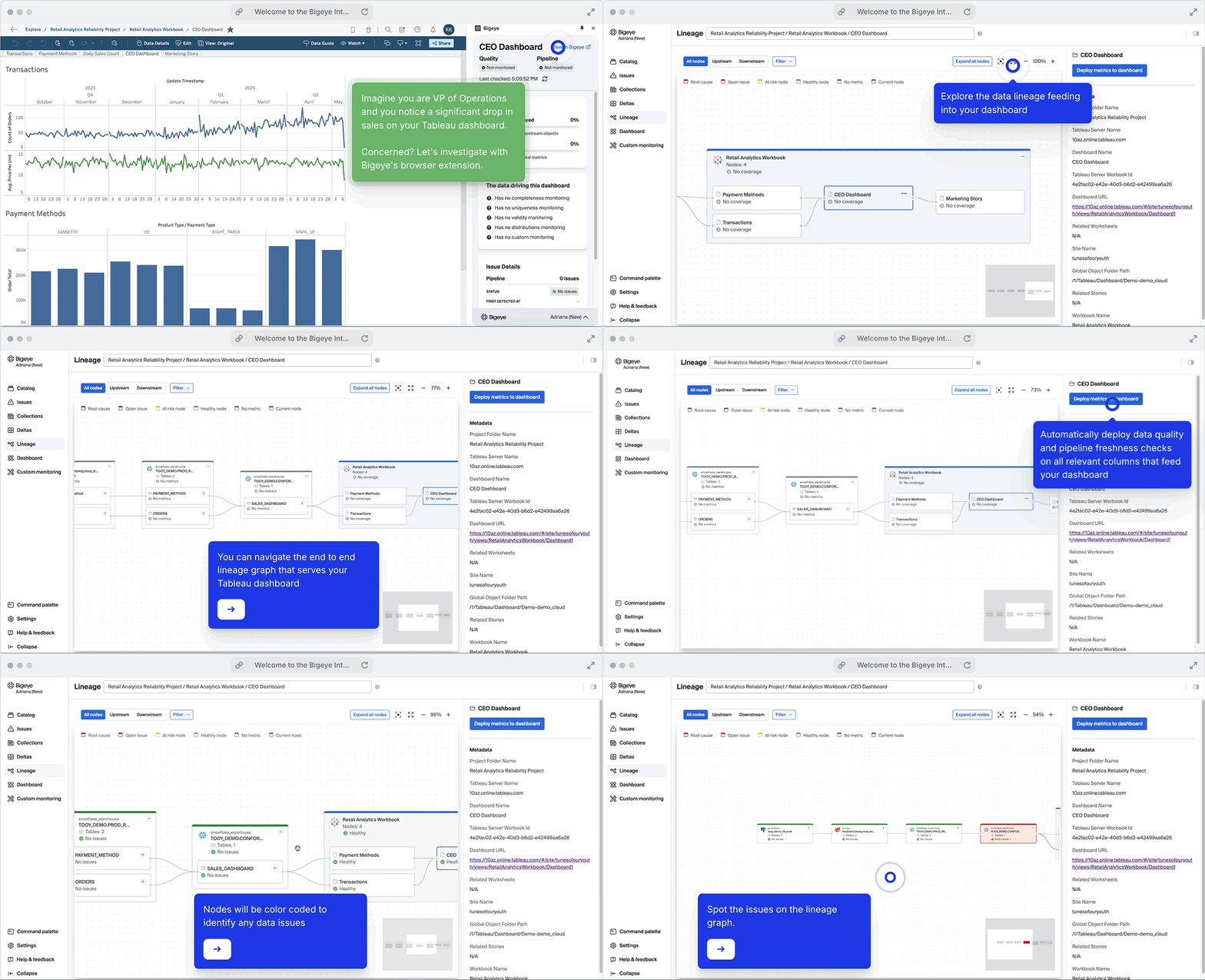
The AI Trust Platform is built on Bigeye’s lineage-enabled data observability technology and empowers organizations to improve data quality, identify sensitive data, meet data risk and policy requirements, and confidently scale AI initiatives.




The Bigeye AI Trust platform consists of multiple modules that allow you to customize the platform to best meet your enterprise data and AI use cases. Monitor your data pipelines, manage data sensitivity and governance, and apply runtime enforcement to your AI policies — all from one integrated platform!
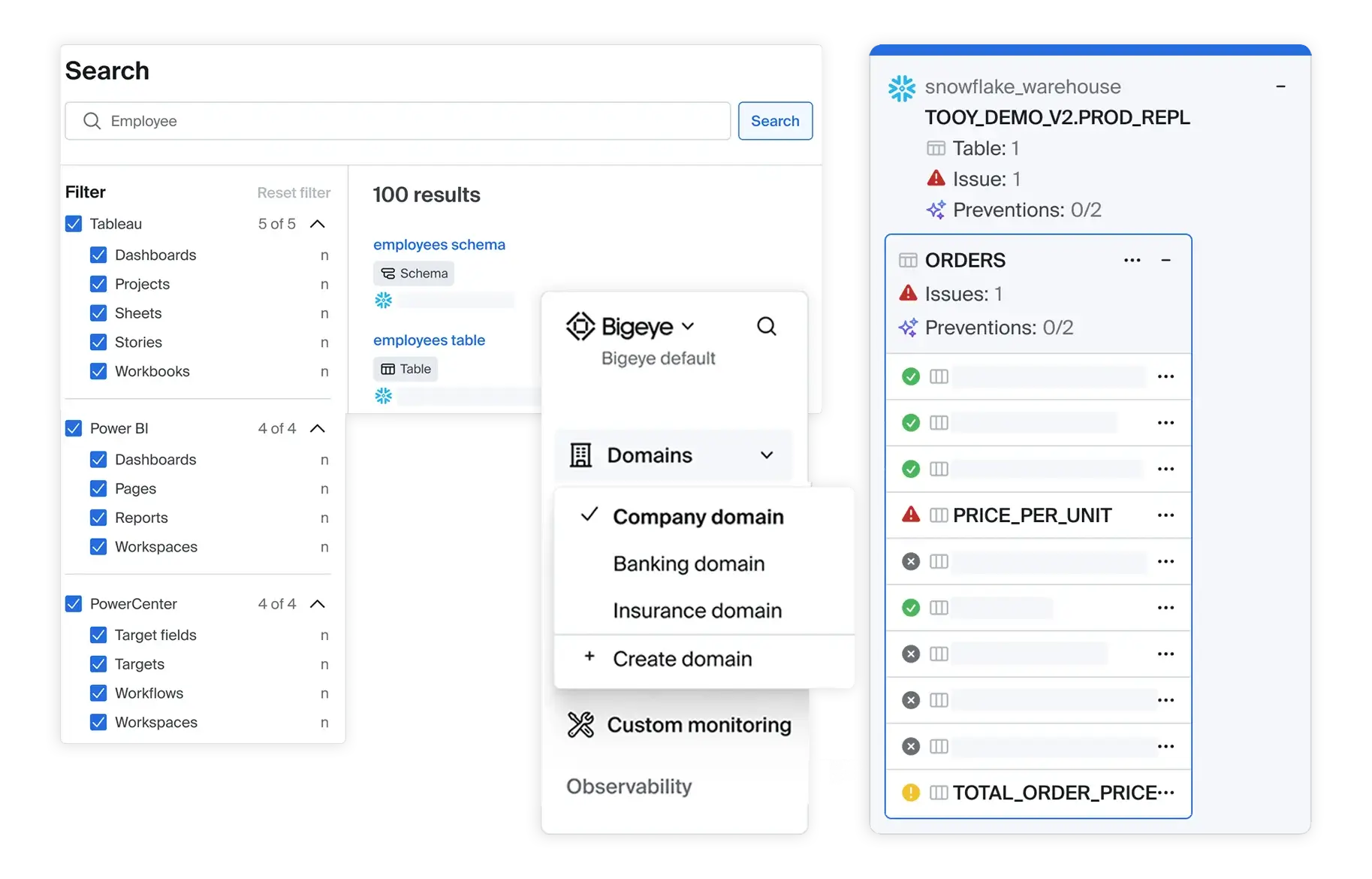
Catalog your data, trace lineage, and capture additional metadata such as tags, owners, and data domains.
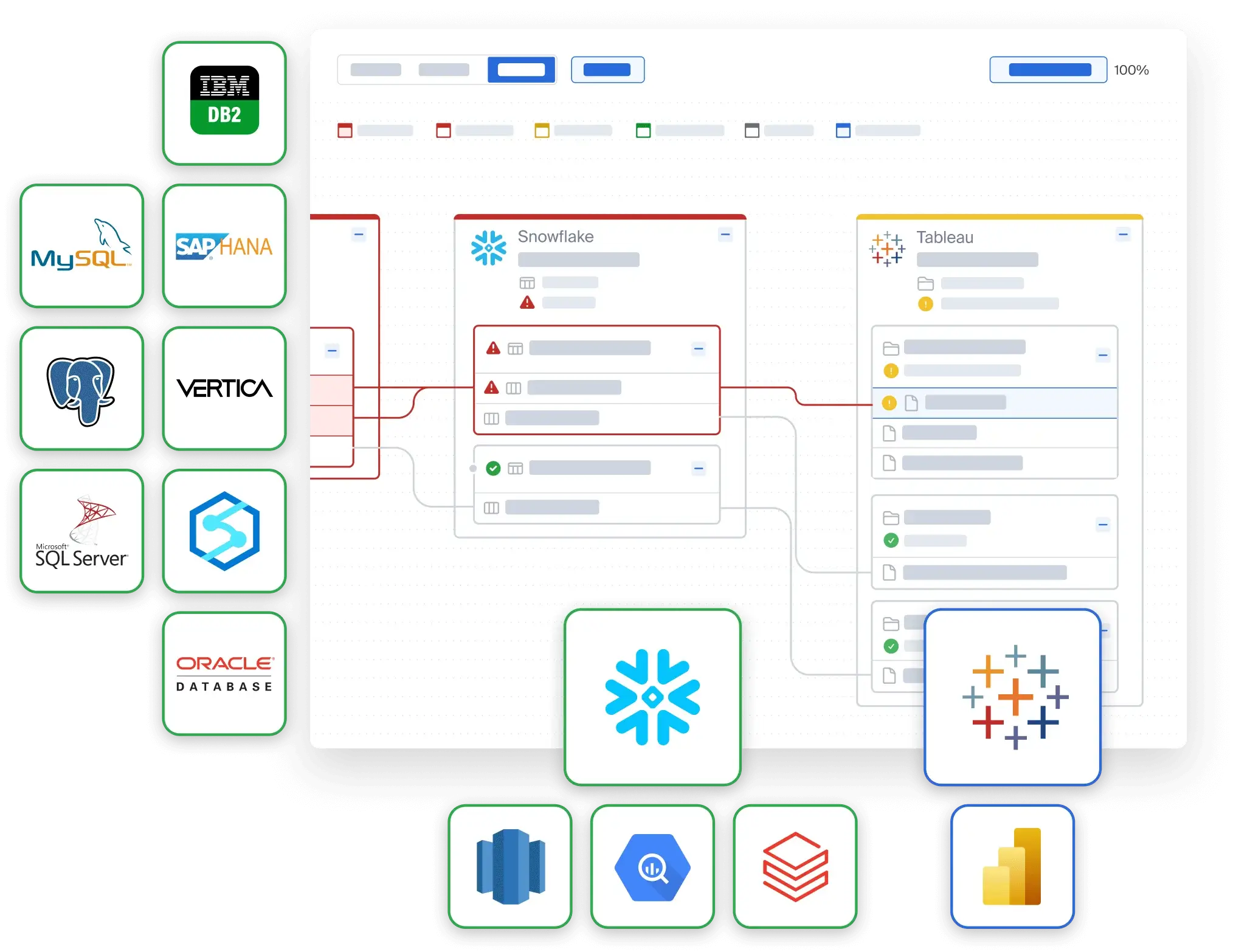
End-to-end data lineage for enterprise environments supporting the broadest range of connectivity for both modern and legacy data stacks.
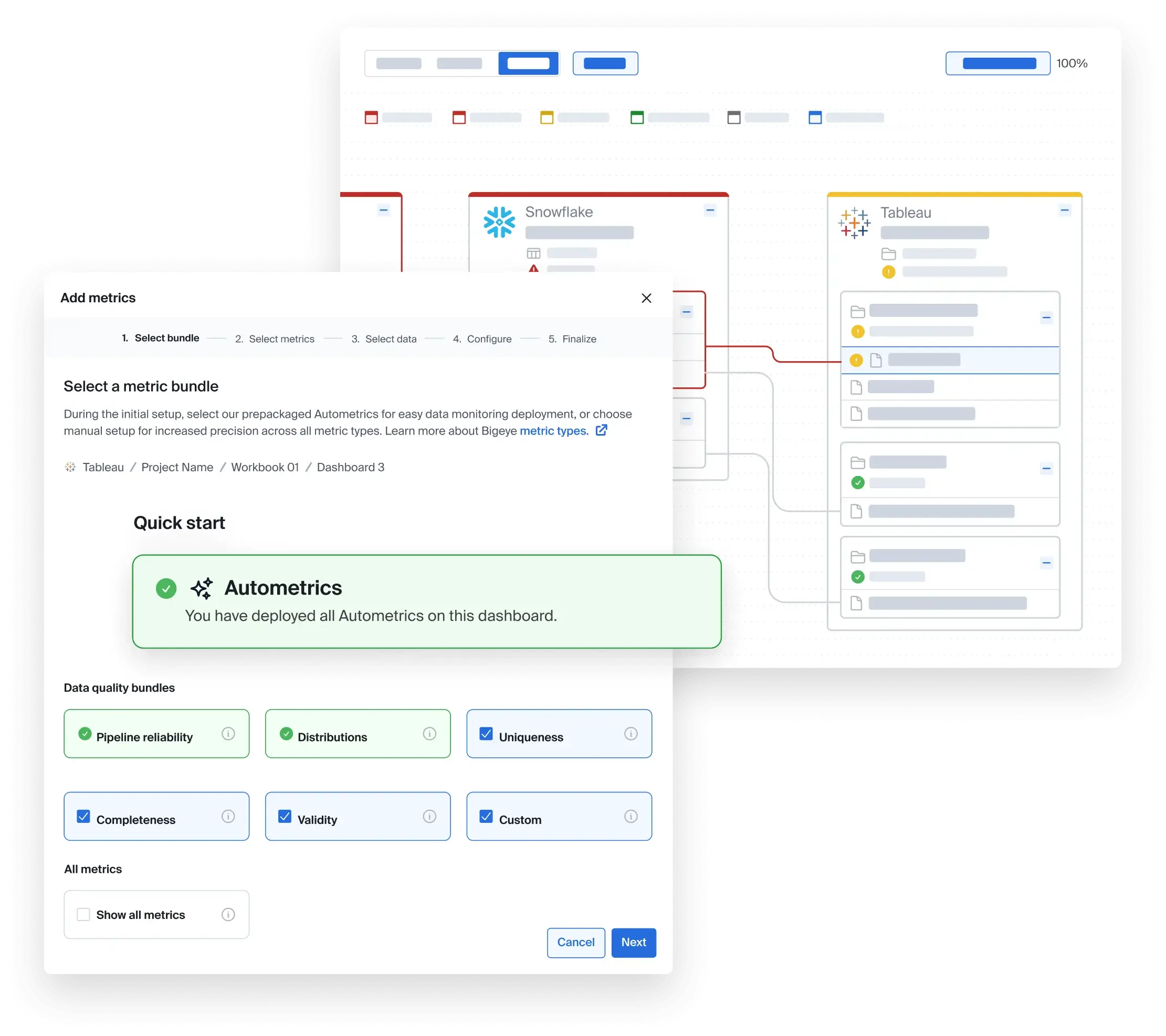
Anomaly detection and data monitoring to accelerate issue identification and resolution, ensuring data reliability and trust.
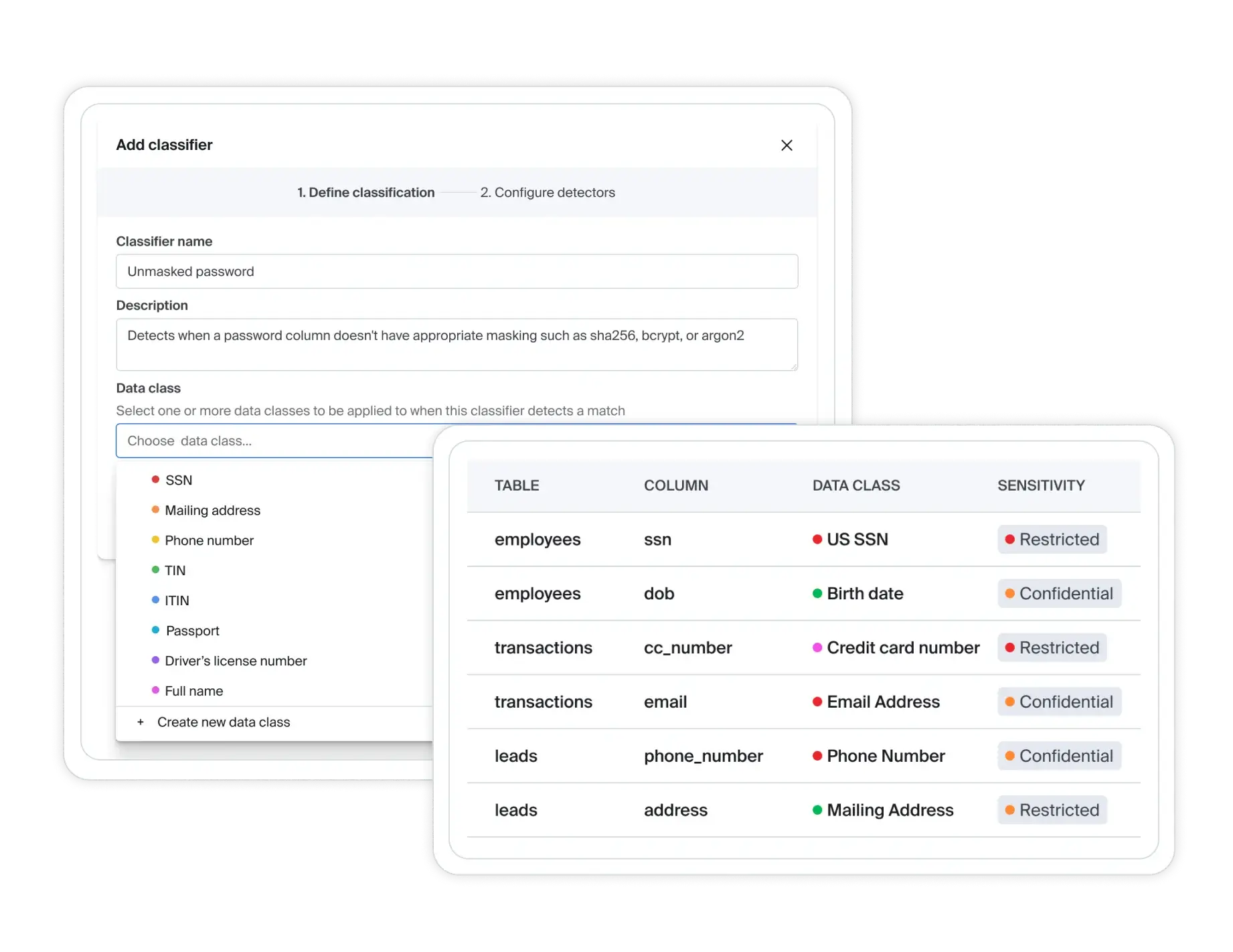
Scan and classify sensitive data in both structured and unstructured environments.
.png)
Streamline data certification, stewardship, business glossary, and semantic layer creation.
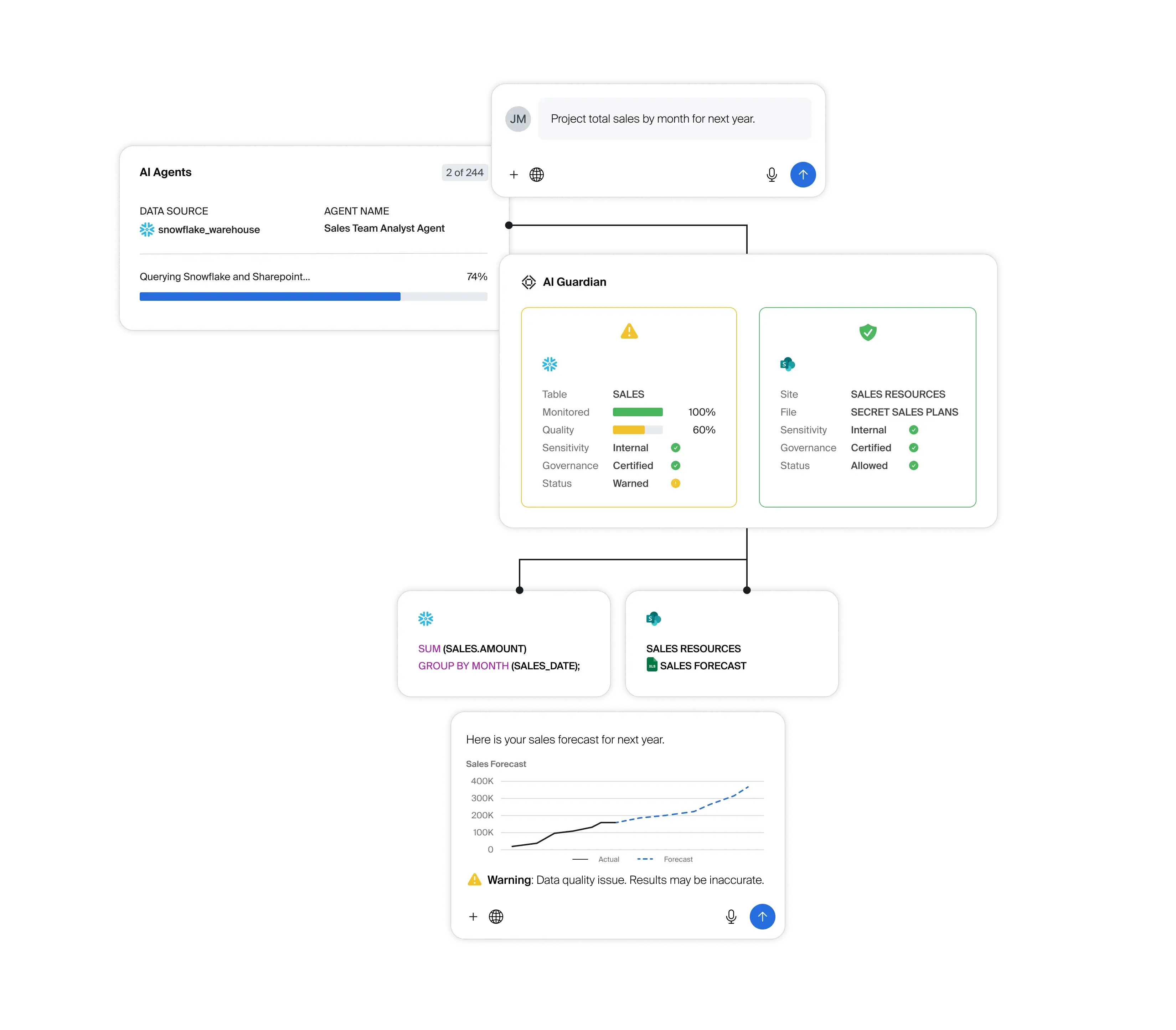
Runtime enforcement of data access policies, ensuring AI applications only access trustworthy data.
"Bigeye caught a major data outage same day that we definitely would not have caught until next week."

"Our analytics team is seeing a 20-40% reduction in errors thanks to Bigeye."
“With Bigeye, detection times are down from 3+ days to under 24 hours—a 66% reduction—and the Udacity data engineering team has a single place to understand the quality of their data pipelines.”
"With Bigeye, I sleep well at night knowing that there is a system checking the quality of the millions of third-party datasets we ingest."
“Bigeye helps us catch one to two major customer-impacting issues a month that get fixed in hours instead of days—And many smaller issues on a daily basis.”
“Bigeye has helped us cut the time to merge by 60% while also providing artifacts on each of our merge requests. This gives us transparency to look back at past requests to see where we failed and what we can improve to decrease failures in the future.”
“We believe in embracing risk. When you are moving as fast as we are, you have to get over the idea that there is a world of zero outages. With Bigeye, those outages won’t slow us down. We know Bigeye will detect any issues before they affect the business.”
“Bigeye has caught influxes that we otherwise would not have seen, and when we reached out to the vendor on why we saw an influx of items at month's end, they said it was an update to how their system works. It's really cool to see how daily things we do changes the data with Bigeye and bigeye notifies on it, such as an intended missed batch job, vendor issues, etc. It's catching everything and you can visually see it in the data. Just wanted to give kudos to you and the team over there, the system works great.”
"The install/configure process was smooth and easy and the vendor helped us every step of the way The AI/ML behind the scenes is pretty powerful The performance was good and the tool was able to scale easily The metrics took some time to adapt and learn the data patterns but once learned they work well The vendor helped us fine tune the metrics and reduce the false positives "
“As a Bigeye customer, we quickly recognized the value their platform brings to enhancing data quality and reliability across enterprise organizations,”

“Dependency Driven Monitoring is the right way to do data observability”

“Bigeye provides us with transparency and insight into all the data that's fed into Freedom Mortgage. It helps us ensure data is accurate the first time - every time. ”

“Managing data quality across our complex data landscape is a continuous challenge, but Bigeye has been a great partner to us and provided the tools and insights needed to stay ahead. Their platform allows us to monitor data health in real-time, ensuring that we meet the high standards required to serve our members effectively.”
“I love Bigeye dashboards. I think they're fantastic. I think that tab summary statistics are great.”
“With Bigeye, it's a much more complete scenario of what the issue is, where the data pain points are, and how to fix it.”
"Bigeye caught a major data outage same day that we definitely would not have caught until next week."
"Our analytics team is seeing a 20-40% reduction in errors thanks to Bigeye."
“With Bigeye, detection times are down from 3+ days to under 24 hours—a 66% reduction—and the Udacity data engineering team has a single place to understand the quality of their data pipelines.”
"With Bigeye, I sleep well at night knowing that there is a system checking the quality of the millions of third-party datasets we ingest."
“Bigeye helps us catch one to two major customer-impacting issues a month that get fixed in hours instead of days—And many smaller issues on a daily basis.”
“Bigeye has helped us cut the time to merge by 60% while also providing artifacts on each of our merge requests. This gives us transparency to look back at past requests to see where we failed and what we can improve to decrease failures in the future.”
“We believe in embracing risk. When you are moving as fast as we are, you have to get over the idea that there is a world of zero outages. With Bigeye, those outages won’t slow us down. We know Bigeye will detect any issues before they affect the business.”
“Bigeye has caught influxes that we otherwise would not have seen, and when we reached out to the vendor on why we saw an influx of items at month's end, they said it was an update to how their system works. It's really cool to see how daily things we do changes the data with Bigeye and bigeye notifies on it, such as an intended missed batch job, vendor issues, etc. It's catching everything and you can visually see it in the data. Just wanted to give kudos to you and the team over there, the system works great.”
"The install/configure process was smooth and easy and the vendor helped us every step of the way The AI/ML behind the scenes is pretty powerful The performance was good and the tool was able to scale easily The metrics took some time to adapt and learn the data patterns but once learned they work well The vendor helped us fine tune the metrics and reduce the false positives "
“As a Bigeye customer, we quickly recognized the value their platform brings to enhancing data quality and reliability across enterprise organizations,”
“Dependency Driven Monitoring is the right way to do data observability”
“Bigeye provides us with transparency and insight into all the data that's fed into Freedom Mortgage. It helps us ensure data is accurate the first time - every time. ”
“Managing data quality across our complex data landscape is a continuous challenge, but Bigeye has been a great partner to us and provided the tools and insights needed to stay ahead. Their platform allows us to monitor data health in real-time, ensuring that we meet the high standards required to serve our members effectively.”
“I love Bigeye dashboards. I think they're fantastic. I think that tab summary statistics are great.”
“With Bigeye, it's a much more complete scenario of what the issue is, where the data pain points are, and how to fix it.”

Business Intelligence Operations, NOV
Learn how Bigeye helped NOV to unify fragmented systems, gain clear lineage insights, and rapidly resolve data issues—restoring trust in their data.
.avif)

- Executive VP of Data Governance, Freedom Mortgage
Learn how Bigeye helped Freedom Mortgage improve the accuracy and effectiveness of its data quality program and enhance overall customer experience.
%20(1).avif)

outages caught and remediated p/ month
Bigeye helps Zoom achieve their vision of delivering trusted data products to the business